The brief
An owned product, documented as built.
Dish KO is operated by True Proper, Inc. and sponsored by 1971 Hook, both led by WERZ founder Sebastian Werz. Every figure on this page comes from the app’s own repository, test results, and dated App Store build records. There are no user or download claims because the app is not yet released.
- Dish KO is operated by True Proper, Inc., where WERZ founder Sebastian Werz is the product lead. 1971 Hook, also founded by Sebastian, is the launch Sponsor. This is an owned-product case study, not an independent client testimonial.
- Product scope, the Ringlight design system, the iOS app end to end, the backend and web companion, contest rules and payout flow, and App Store submission.
- Native iPhone and iPad app (iOS 17 and up) with its own backend and a web companion.
- 124,397 lines of code, 929 automated tests, 22 TestFlight builds, five months from first commit to submission.
- Version 1.4.1 submitted August 25, 2026; public TestFlight beta approved. Not yet released — the page makes no user or download claims.
- Figures are taken from the project's own history, test results, and dated App Store build records.
- 124,397
- Lines of code in the app repository
- 929
- Automated tests, plus a simulated 1,200-cook season before every release
- 22
- TestFlight builds from first commit to submission
- 5 mo
- March 21 to August 25, 2026 — first commit to App Store submission
01 / Pivot
It started as a hot sauce app. Competition turned out to be the product.
The first commit on March 21, 2026 was a conventional brand app for 1971 Hook: Shop, Recipes, Rewards, Locations, Profile, with a cart, native checkout, and a lock-screen widget. It worked. It was also the same app every CPG brand ships and nobody opens twice.
In April a product review reached a harder conclusion: the only screen anyone would come back for was the one where two dishes fought. So commerce was cut, the feed was cut, the tab bar went from five to three, and the app was rebranded as Dish KO — a standalone platform where 1971 Hook is the first Sponsor rather than the whole point. Every other brand can run the same competition template.
02 / Loop
Two plates. One vote. Then the reveal.
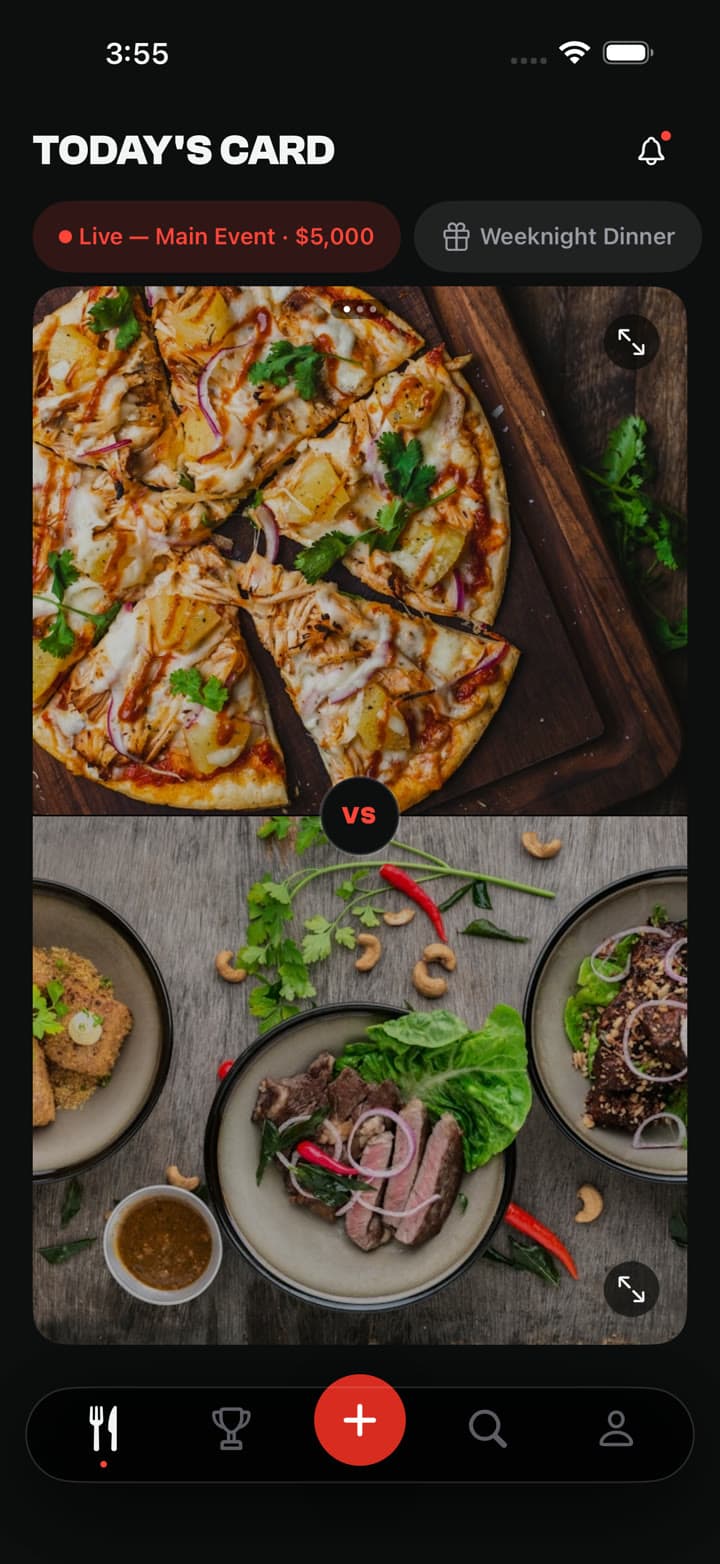
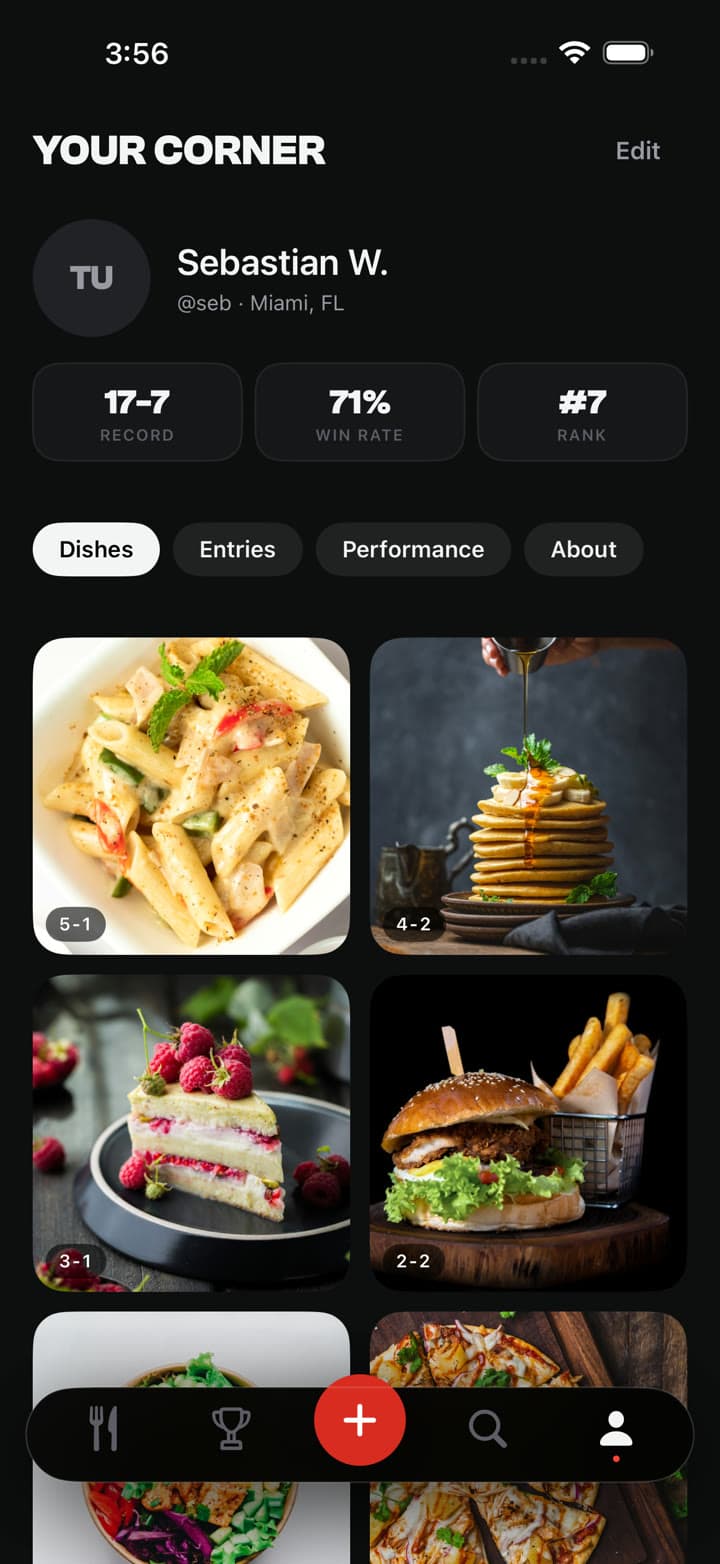
Today’s Card stacks two dishes under a VS medallion. The chef’s identity is hidden until the vote lands, so a mom’s lasagna and a tasting-menu plate get judged on the same terms. Every vote moves both cooks’ ratings and taps the loser on the shoulder with a notification. Wins accumulate into records, win rates, belts, and a public rank — the same numbers that gate the cash contest.
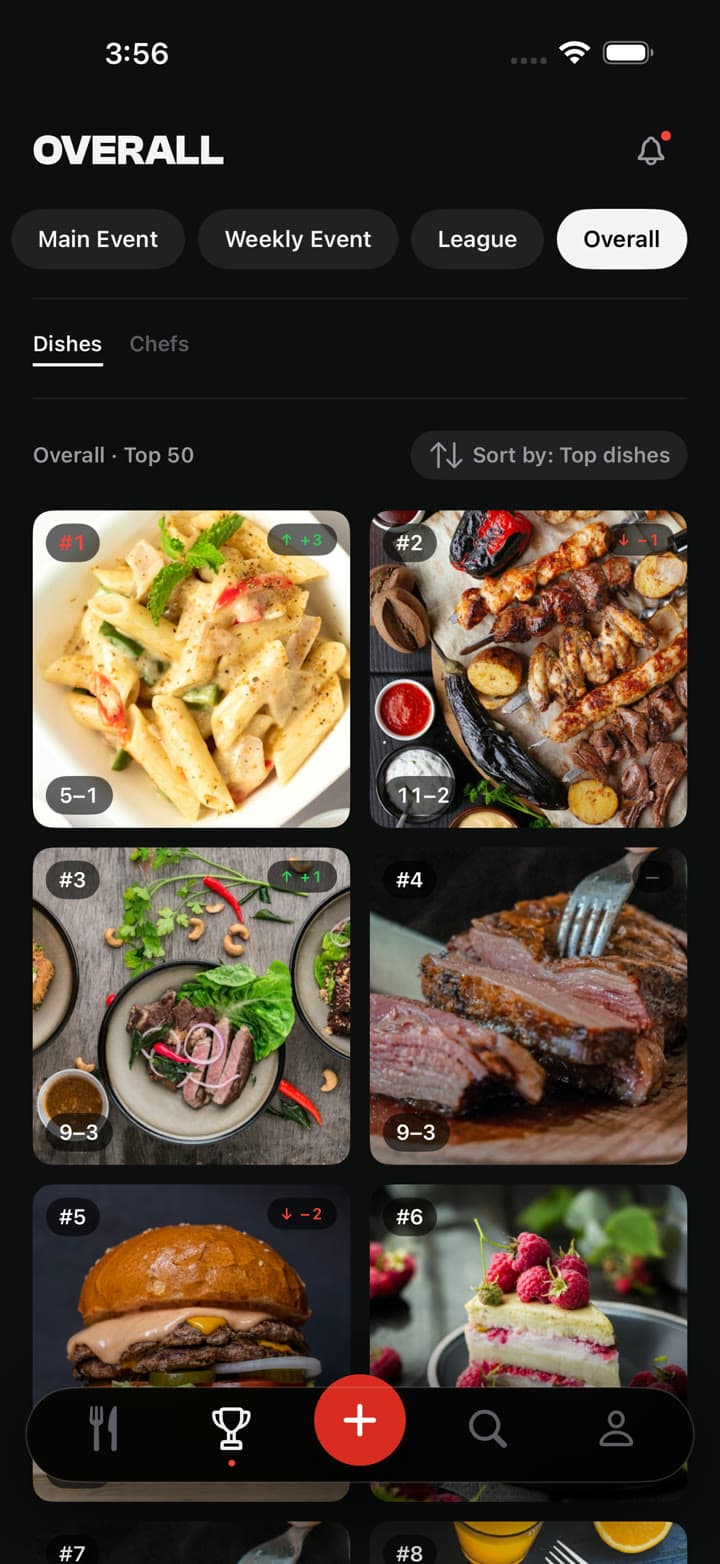
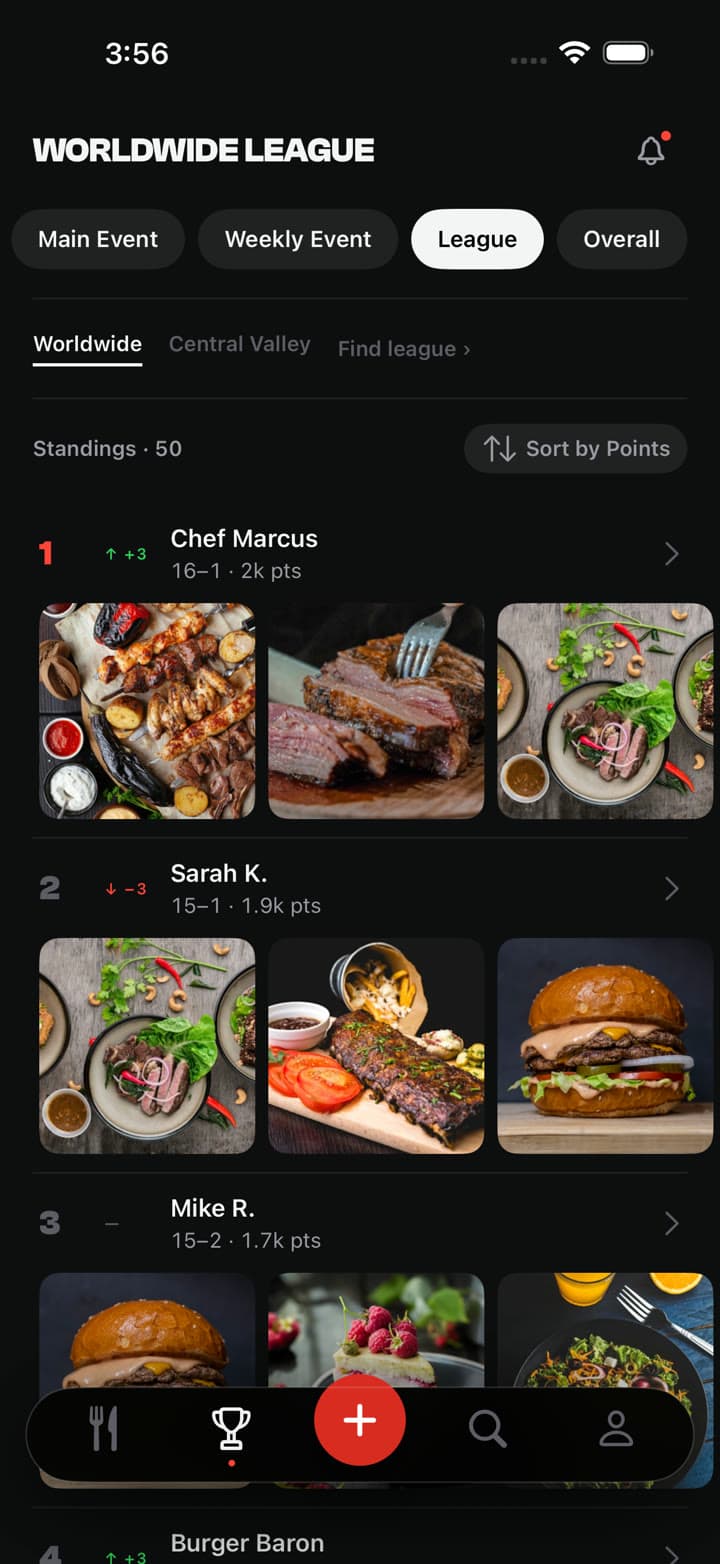
- LeagueRegionally scoped standings, server-computed points. Worldwide down to Central Valley.
- Weekly ChallengeOne-week windows with a themed brief and a hot-sauce prize.
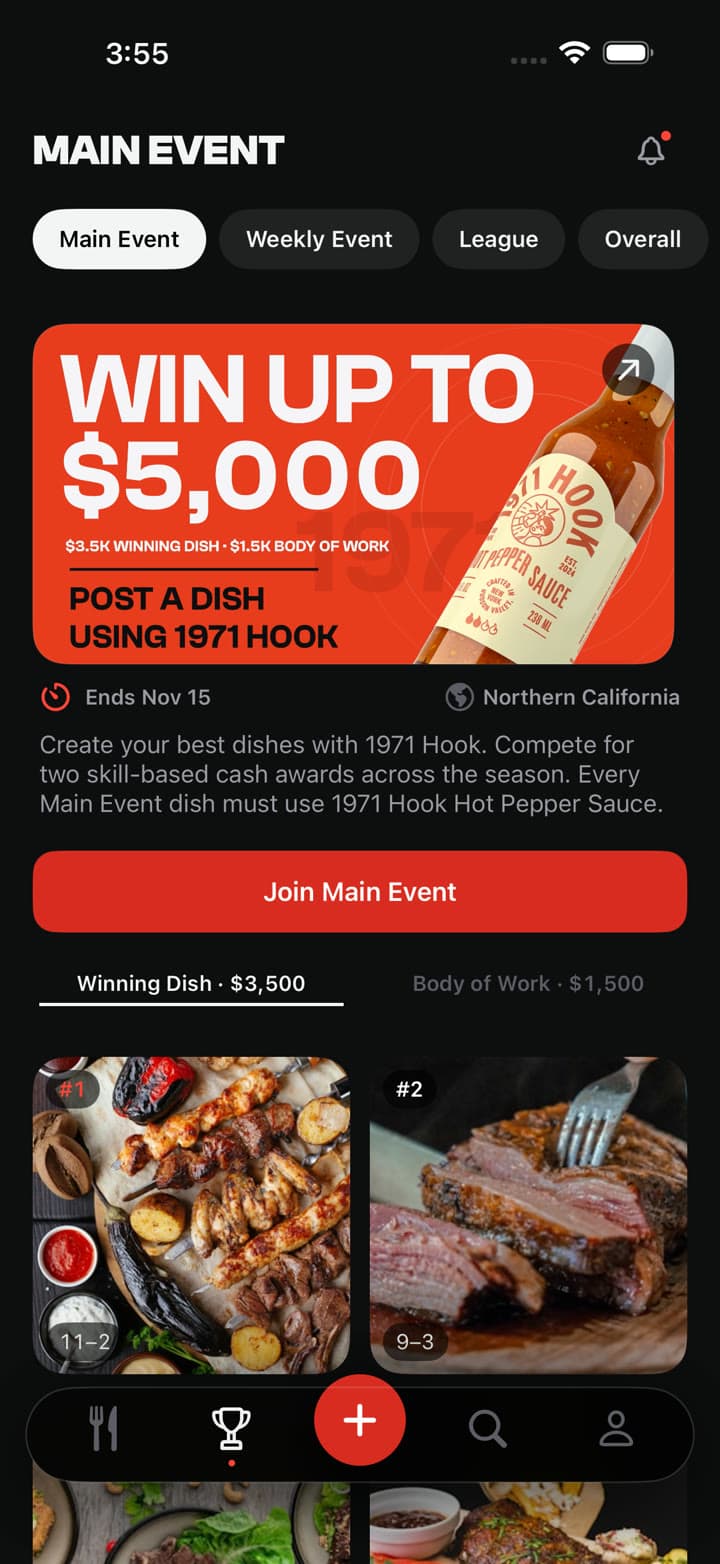
- Main EventPurchase-gated skill contest with a $5,000 split purse and human receipt review.
- GroupsFriend-created, blind-judged private competitions. Built, feature-flagged for a later season.
03 / Main Event
$5,000, 45 stores, and a receipt.
A purchase-gated skill contest, not a sweepstakes — a distinction that shaped the product as much as the legal brief.
Buy a bottle of 1971 Hook at one of 45 participating stores (43 California Whole Foods, plus Reno and Boise), photograph the receipt in the app, attest residency and age, and a human reviews it within 24 hours.
Then you post one Fighting Dish per week and let the blind vote do the rest. Two awards: a $3,500 Champion’s Purse, scored so a steady record beats a lucky streak, and a $1,500 Body of Work for the most knockouts across a chef’s best four dishes. A dry run with 1,200 simulated entrants showed only about 7% would ever appear in the public top 100 — which is why the app shows every cook their own climb, not just a leaderboard.
- $5,000
- 45
- 24h
- Nov 15
04 / Build
Built like an app people keep, not a demo.
A cash contest can’t fall over on the final weekend, and a social app can’t feel like a website in a shell. So the boring parts got the most care: native, live without refreshing, every App Review checkbox cleared, rehearsed at full scale before every release.
- Native, not a wrapper
- Built for iPhone and iPad in Apple's own tools, so it feels like the phone: instant scroll, haptics, share sheets, the lot.
- Live, not refreshed
- Duels, messages, and rank changes arrive as they happen, and the app quietly recovers on its own when the connection drops.
- Sign-in and safety done properly
- Apple and Google sign-in, report and block, appeals, and in-app account deletion — everything App Review asks for, before they ask.
- Tested before it's trusted
- Every change runs a simulated season of 1,200 cooks and 192,000 votes before it can ship, on top of 929 automated tests.
Design system — Ringlight
A dark arena with a single red light.
The first design direction was fight-poster maximalism — matte black, vintage gold, halftone texture. It photographed well and read badly at 3am on a phone. Ringlight replaced it: true-black grounds, Clash Grotesk for display, SF Pro for everything else, and one accent.
The rule that holds it together is a red budget: at most one action red and two signal reds per screen, with a written demotion order when a screen wants more. Wins are green, warnings are amber, and nothing else gets color. The restraint is the confidence.
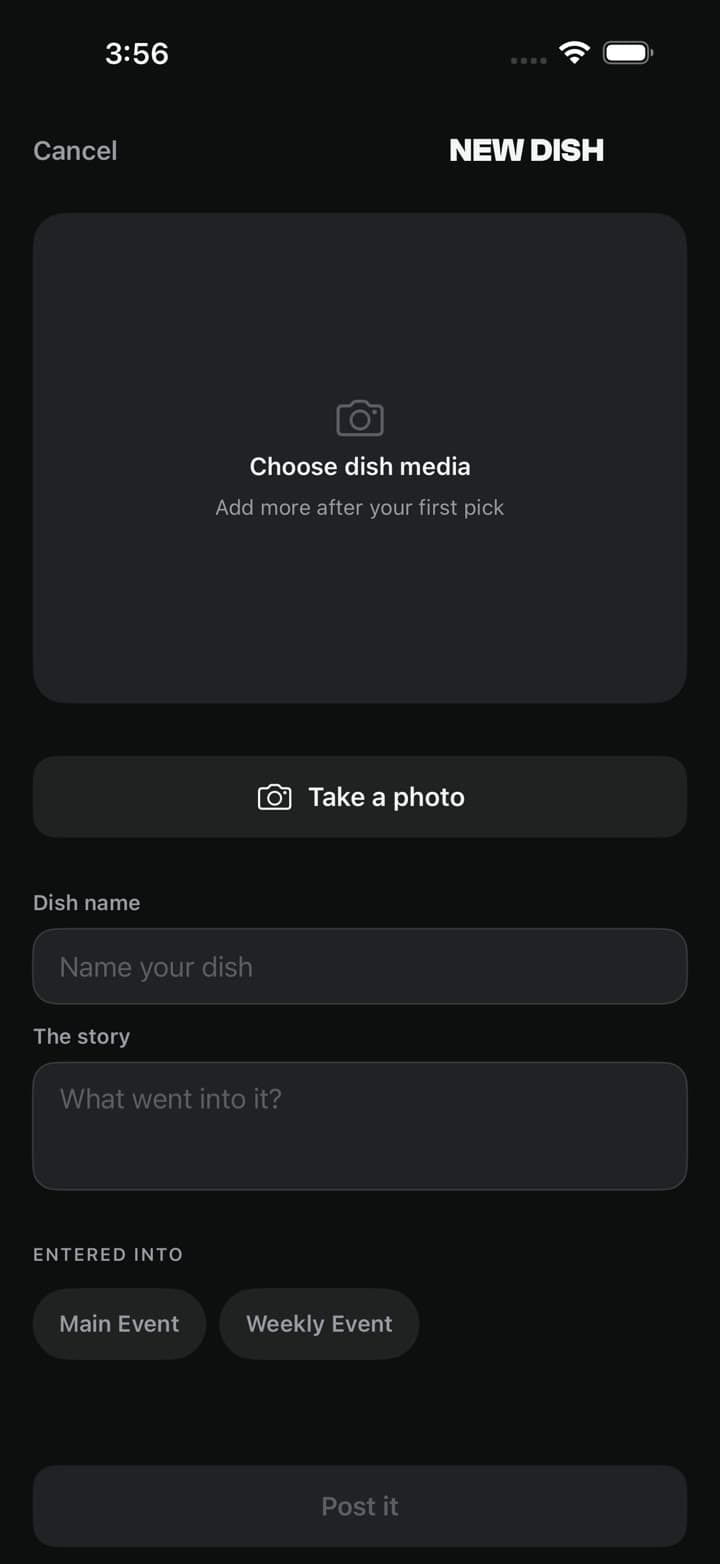
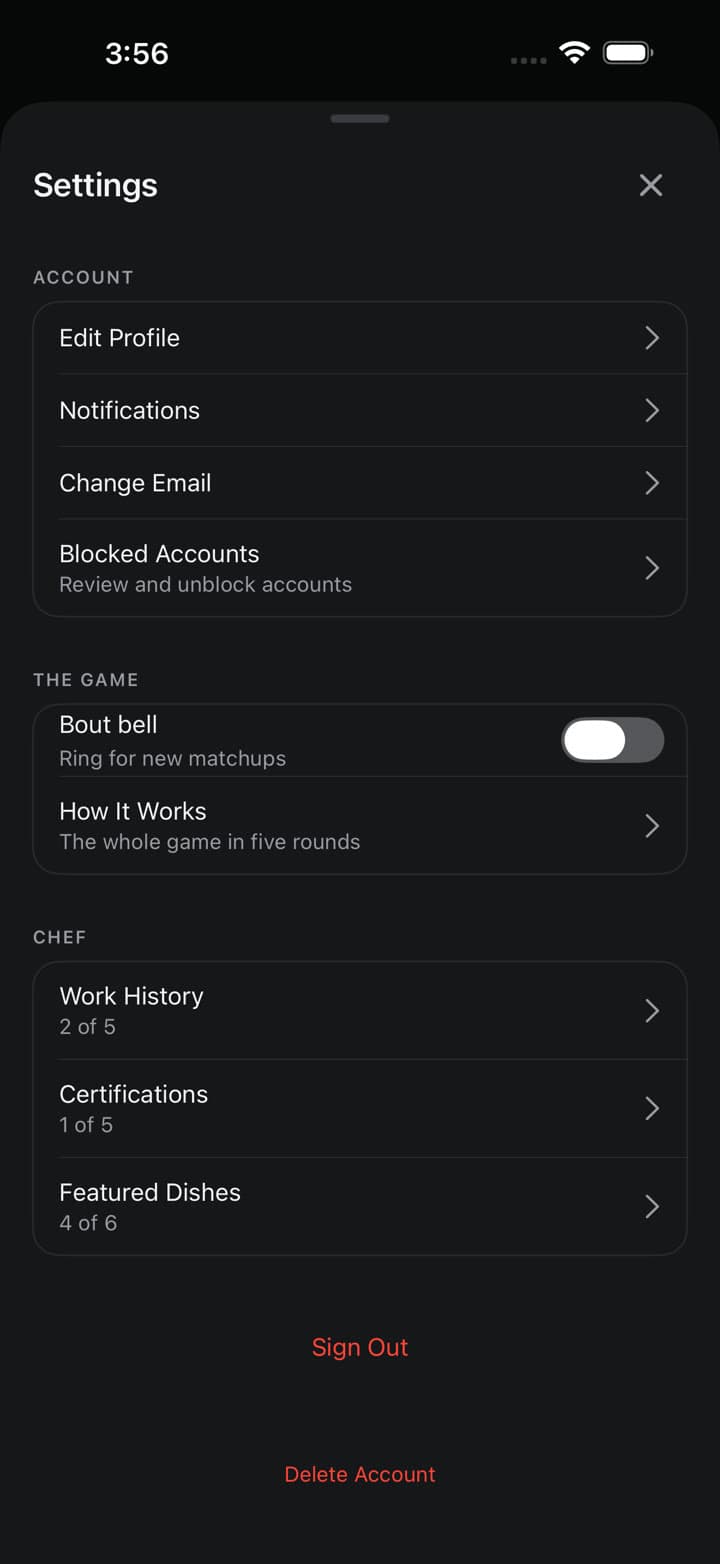
The screens
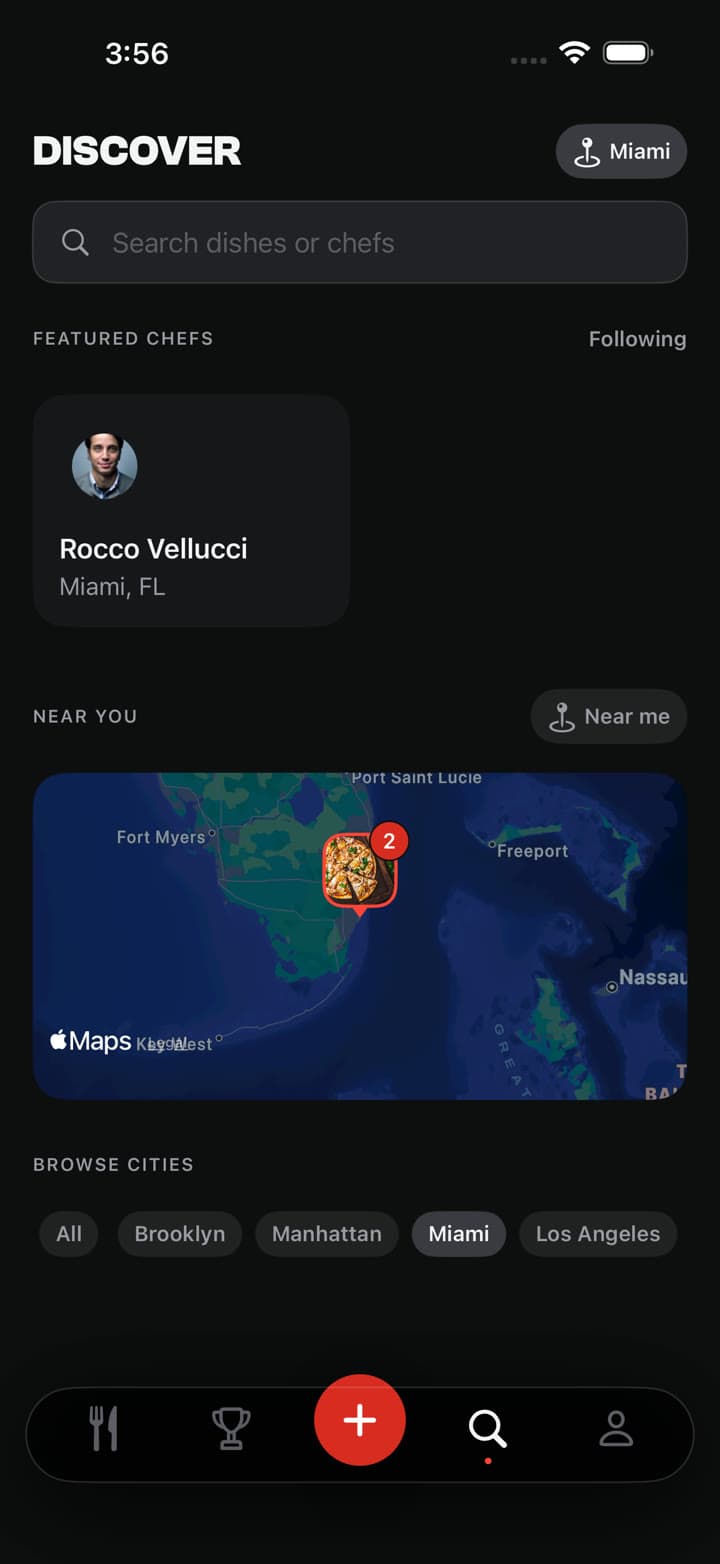
Vote, compete, discover, your corner.
Every core screen of the submitted build, uncropped.
What we delivered
One product, six deliverables.
- Product & scope
- Ringlight design system
- Native iOS app
- Backend & web
- Main Event contest
- App Store submission
Disclosure
Dish KO is operated by True Proper, Inc. and sponsored by 1971 Hook — both led by WERZ founder Sebastian Werz. This page is first-party documentation of an owned product, presented as a case study rather than a client endorsement. Adoption figures will be added only once the app is publicly released.