01Overview
Valley Children's Hospital commissioned WERZ to produce a bilingual patient education video (English and Spanish) walking families through the pediatric sleep study process. Shot on-site at the hospital's sleep study facility in a half-day production, the film demystifies the experience for children and parents and is used across the hospital system's digital and in-facility channels.
02About the Client
The only standalone children's hospital between Los Angeles and Seattle. 358 beds, 3,500+ staff, Level IV NICU, nationally ranked in 7 pediatric specialties by U.S. News & World Report, Stanford-affiliated, Magnet designation 4x. Serves 1.3 million children across Central California.
03Production Breakdown
Long-form patient education film for Valley Children's that walks families through what to bring, where to go, what the room looks like, and how clinicians place monitoring equipment during a pediatric sleep study.
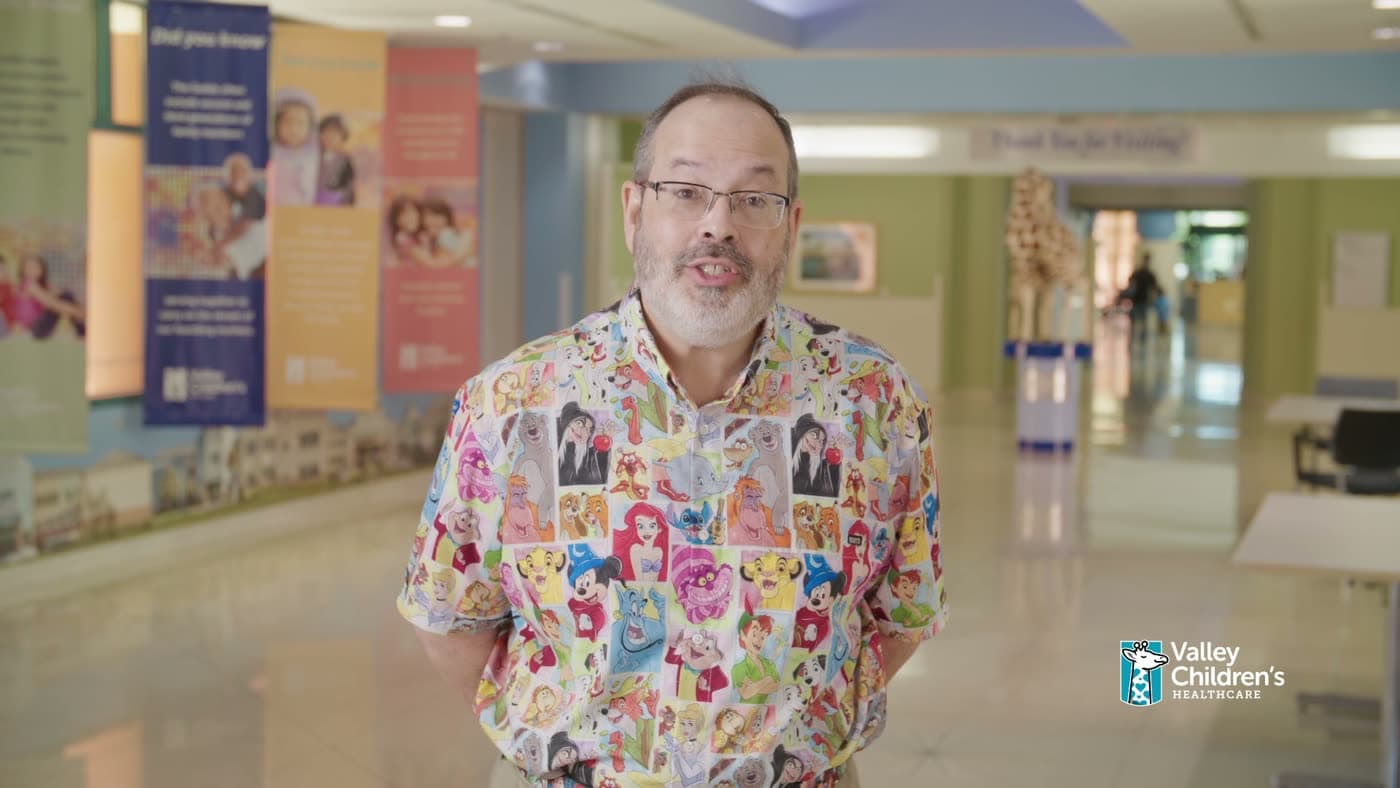
Hospital-hallway host intro, teal information cards, exterior and wayfinding shots, room walkthroughs, close coverage of clinician setup, EEG-monitor inserts, and a follow-up/contact end card create a calm, instructional healthcare piece.
Interview-led testimonial audio for Valley Children's Hospital focused on lived experience, reassurance, and concrete outcomes. Hello, my name is Dr. David Serbayer. I'm the medical director of Valley Children's Hospital Sleep Medicine. Welcome and thank you for trusting us with your child's sleep study. The following video is going to take you through what you can expect when you bring your child here for their sleep study.
Deliverables
- patient education film
- hospital website explainer
- in-clinic orientation video
- family onboarding content
- bilingual patient education campaign
Production
- on-site hospital production
- physician or host segment
- facility walkthrough coverage
- clinician observational footage
- close-up medical procedure detail
- informational graphics
- educational editorial structure
- healthcare brand finishing
Visual Style
- hospital hallway intro
- teal information cards
- campus exterior
- sleep-lab signage
- clinician prep closeups
- EEG monitor screen
- Valley Children's end card
Why It Works
- Shows WERZ can demystify a complex medical process without losing empathy or clarity.
- Demonstrates filming inside an active clinical environment with procedural detail and family-friendly tone.
- Useful proof for healthcare, patient onboarding, hospital education, and medical-service storytelling briefs.
Featured Voices
Male host
Clinician or on-camera guide who frames the sleep-study process for parents and families.
Key Shots
Shot 1 · host intro in hallway
A clinician or host opens in a hospital hallway, framing the piece as an authoritative but family-friendly guide.
Shot 2 · what-to-bring graphics
Teal title cards list what families should bring to the sleep study, shifting the video into practical preparation mode.
Shot 3 · arrival and exterior beat
Exterior and front-desk imagery show the arrival process and the physical setting of the hospital campus.
Shot 4 · wayfinding and room overview
Hallway signage and room coverage orient families to the sleep-lab environment before any procedure begins.
Shot 5 · initial setup coverage
The child patient and technician are shown at the bedside as the study setup begins in a calm, controlled manner.
Shot 6 · sensor application closeups
Close-up coverage of the technician placing leads and wraps makes the clinical process understandable without feeling alarming.
Audio / Dialogue
Hello, my name is Dr. David Serbayer. I'm the medical director of Valley Children's Hospital Sleep Medicine. Welcome and thank you for trusting us with your child's sleep study. The following video is going to take you through what you can expect when you bring your child here for their sleep study. Let's begin with what you will need to bring with you to the hospital on the night of the sleep study.
On-Screen Text
+Full Transcript
Hello, my name is Dr. David Serbayer. I'm the medical director of Valley Children's Hospital Sleep Medicine. Welcome and thank you for trusting us with your child's sleep study. The following video is going to take you through what you can expect when you bring your child here for their sleep study. Let's begin with what you will need to bring with you to the hospital on the night of the sleep study. The first will be your child's pajamas, a favorite bedtime buddy for them to cuddle with, a favorite blanket or pillow, all the medications that you give your child at bedtime. This will also include rescue medicines particularly for children who have asthma or seizures, any melatonin or clonidine that the doctor has prescribed to you to help your child sleep during the study. And finally, a change of clothing. First, please arrive at our main entrance at 7 pm and let security know you are there for an appointment with our sleep lab. Once checked in, our security team will direct you to the sky elevators. Take the elevator to the second floor and walk down the hallway to the EEG and sleep lab. Please take a seat in the chairs outside the lab. Soon, one of our technicians will take you back to your room. This will be the room where you and your child will spend the night. We ask one parent to stay with the child throughout the night. There will be a hospital bed for your child and a recliner chair for you. If you were prescribed melatonin or clonidine to help your child sleep through the study, please give it now. Once you're settled in the room, the sleep technologist will place sensors on your child's head, face, chest, and legs. While it may seem like there are a lot of sensors, they won't hurt at all. First, we will clean the spot for the sensors with an alcohol pad. Sensors will be placed on the head to measure how well your child is sleeping. These sensors will be applied using a special paste. You will feel a light squish on your head as the sensor is applied. It won't hurt, but it may give you messy hair until you wash it out the next morning. A sensor attached to a clear tube will be placed under the nose to measure breathing. A sensor will be placed on the neck to measure snoring. A sensor will be placed on the chest to measure heart rate. Sensors will be placed on the thumb to measure oxygen levels and one on the arm to measure carbon dioxide levels. A belt will be placed around the chest and a second belt around the belly to measure your child's breathing. And finally, a sensor will be placed on the leg to measure any abnormal movements. Once the sensors are in place, the sleep technologist will wrap your child's head in a soft cloth and tape it down to help the sensors stay in place. We'll then cover all the wires with a soft stocking that connects the wire box to your child's head. This will also keep the wires in place and out of the way while your child sleeps. And we're done! Now it's time to sleep. Your child is able to move in any position they like. If you need assistance, just push the intercom button and the staff will come in to assist you. While you're sleeping, the sleep technologist is watching all the information the sensors are recording. It's 5 a.m. and time to rise and shine. The sleep technologist will now come in to remove all the sensors. The results of the sleep study will be ready in one week. If you have a Valley Children's MyChart account, a report will be sent to you through the application. Results will also be sent to your primary care physician. For any questions or to set up a follow-up appointment, please call our office at 559-353-5550. Thank you and we look forward to seeing you soon.