
Investor-deck brand film: what fundable founders actually ship.
A brand film inside a Series A through Series C deck is a different deliverable than a marketing brand film. Investors are watching for product clarity, founder presence, traction signal, and execution discipline — not vibe and aesthetic. This guide covers what makes an investor-deck brand film fundable (and what makes it skippable), with specific guidance for hard tech and climate tech founders where the deliverable matters most.
What investor-deck brand film does that decks alone don't
A 60-90 second brand film embedded in a fundraising deck does three things slides struggle with: (1) shows the founder as a real human running a real company, (2) shows the product working in its actual environment instead of mockups, (3) compresses the entire pitch into a tone that the investor will remember after the meeting. Investors take 100+ meetings a quarter. The films they remember are the ones that explain what the company does in the first 15 seconds and stay focused for the next 75.
What makes an investor-deck brand film fundable
The patterns that show up in films that actually move fundraising conversations: clear product demonstration in real environment, founder on camera with confidence (not over-coached), specific traction or milestones referenced, compressed runtime (90 seconds max), and minimal abstraction. Films that feel like ads underperform. Films that feel like a 90-second documentary about a real company and a real product convert.
What to avoid in investor-deck brand film
The patterns that make investors skip the film and move on: abstract 'innovation' b-roll, multi-minute runtimes, mockups instead of working product, founder absent or in voiceover-only, overly slick production that signals 'spent the seed round on a brand video.' Investors want capital efficiency signals. A perfectly crafted $200,000 brand film for a $5M-ARR startup signals misallocated resources, not ambition.
Scope by stage
Pre-seed and seed: skip the brand film. Use a 60-second founder iPhone video instead — investors at this stage want raw signal, not produced content. Series A: $15,000-$35,000 single-day shoot for a focused hero film. Series B: $35,000-$80,000 for a hero film + customer/product cutdowns. Series C and growth: $80,000-$200,000 for a multi-deliverable campaign that supports both the deck and broader marketing.
- Pre-seed / seed
- founder iPhone video, no production budget needed
- Series A
- $15,000-$35,000, single-day shoot, single hero film
- Series B
- $35,000-$80,000, multi-day, hero + product/customer cutdowns
- Series C+
- $80,000-$200,000, multi-deliverable launch + brand campaign
- Bridge / growth rounds
- scope to the round size; under-spend, don't over-spend
Hard tech and climate tech specifics
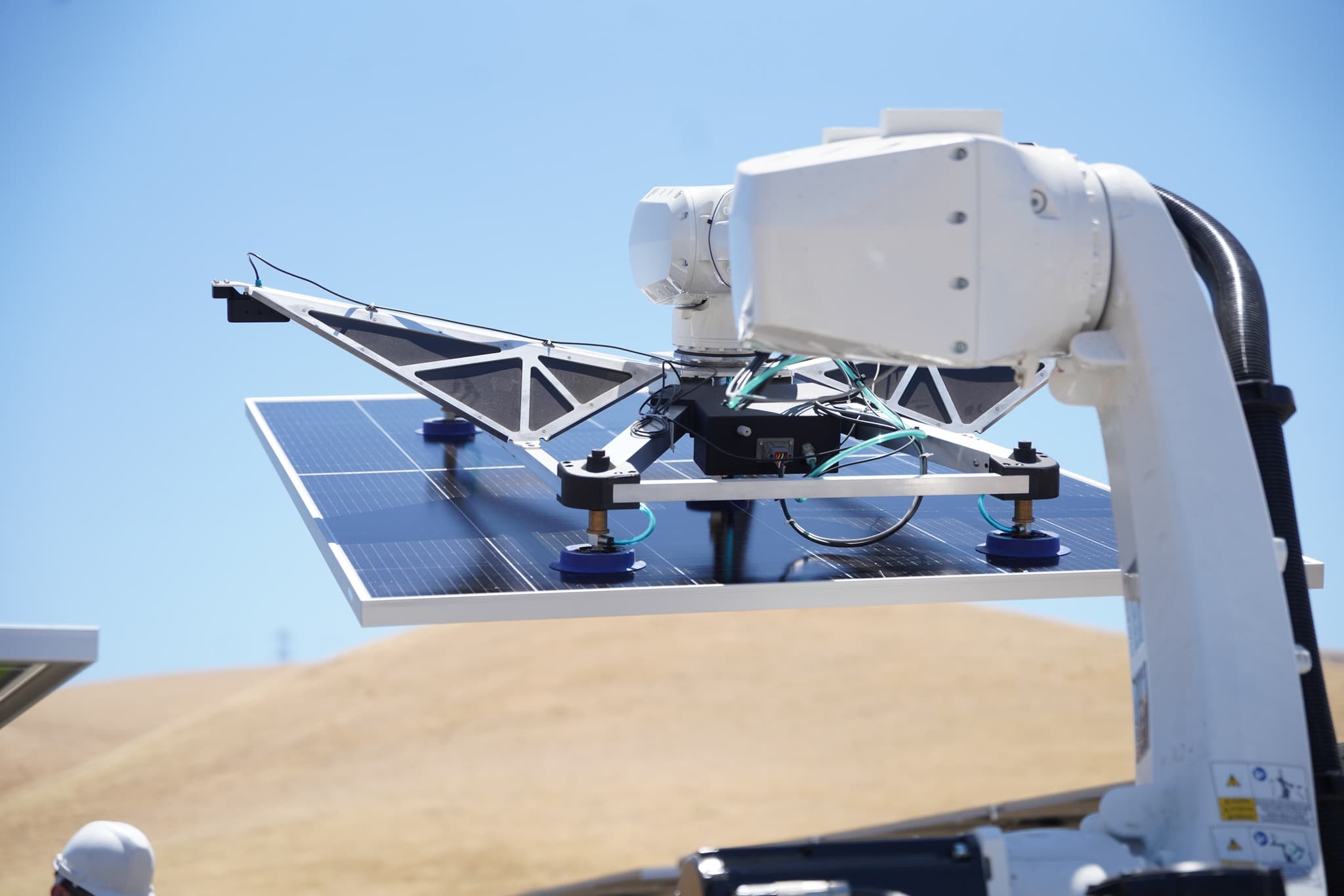
Hard tech and climate tech investors look for technical depth and execution proof in ways software investors don't. The brand film has to demonstrate the team can ship physical product. That means real factory or install footage, founder explaining the technology with technical language (not over-simplified), and ideally a customer or EPC partner appearing on camera. Generic agencies miss this brief consistently — see /resources/how-to-choose-video-production-climate-tech-startups for the buyer's guide on choosing the right partner.
“By far the best experience I've had filming video.”
Common questions.
Is an investor-deck brand film worth it at Series A?+
Yes, for hard tech, climate tech, hardware, and any deeply technical category. The film does what slides can't — shows the product working in its real environment, the founder as a real operator, and the team as a real company. For pure-software SaaS at Series A, the value is lower; investors at that stage often skip the embedded video and read the deck. For physical-product companies, the film moves the meeting.
What's the typical runtime for an investor-deck brand film?+
60-90 seconds is the sweet spot. Under 60 seconds and you can't establish the product or the founder properly. Over 90 seconds and investors stop watching in the meeting context. Some Series B/C founders also produce a 30-second cutdown for use inside the slide rather than as a standalone video — best of both worlds.
Should the brand film include the founder on camera?+
Almost always yes. Investors fund people more than products. A film with founder on camera (3-4 specific moments interspersed with product/site footage) outperforms a voiceover-only film by a meaningful margin in fundraising contexts. Founders who are camera-shy can pre-interview to find the moments that play well, then lock in those.
How long does an investor-deck brand film take to produce?+
Typical timeline at WERZ: 1-2 weeks from the first call to the finished film. 2-3 days of pre-production (concept, script, scheduling), 1-2 days on set, 5-7 days of post-production (rough cut + revisions + final). Rush timelines down to 3 weeks total are possible at premium pricing if a fundraising deadline is fixed.
Can we use the same film for fundraising and marketing?+
Yes — and you should plan it this way upfront. The hero 60-90 second film works in the deck. A few cutdowns (15s, 30s) sized for paid social and the website carry the same story to public audiences. One shoot day, two distribution channels. Saves dramatically vs producing separate fundraising and marketing films.
More questions (5)
How does WERZ price video, web, or marketing work?+
Pricing is scope-based, not template-based. We define deliverables, audience, locations, crew, and revisions before quoting — so the budget reflects actual production needs rather than a pre-set tier.
Can WERZ work from a fixed budget?+
Yes. A fixed budget works best when deliverables, locations, revision rounds, and timeline are clear before production starts. We will tell you what is achievable inside the budget rather than promise more than the scope supports.
Are there ongoing retainers, or only project work?+
Both. Most marketing and web programs run as monthly retainers (strategy, content, optimization). Video and brand projects are typically scoped per engagement, with optional content retainers for ongoing assets.
How long does a typical engagement take?+
Discovery and strategy run 1–2 weeks; production and build run 3–8 weeks depending on scope; launch and iteration kicks off after delivery. Marketing programs are ongoing with measurable milestones at month one, month three, and month six.
Can you accommodate a tight deadline?+
Yes, when the scope and approval lanes are tight. Rush projects work best when the team can lock decisions quickly and accept fewer revision rounds. We will tell you upfront if a deadline is unrealistic for the scope.
Keep planning.
Get our production brief template.
A one-page brief to fill in before you talk to any production company. After that, one email when we publish a new guide on how we plan and film launches, robots and live job sites. Nothing else, and you can unsubscribe anytime.
Plan your next video project.
Tell us the goal, the audience, and the deliverables. We will scope the production around that.
Not ready for a call? Send a brief — written reply within one business day — or estimate your budget in two minutes.
- 2
- launch films featured by Y Combinator (Cosmic Robotics, Rhem Labs)
- 4 days
- Hemlock (YC F26): scoping call to a wrapped shoot
- 100K+
- impressions on Rhem Labs’ launch
- 45
- Whole Foods stores for 1971 Hook