Recently updated
Resources/Guide/How to choose a video production company for climate tech startups.

How to choose a video production company for climate tech startups.

By WERZ Editorial8 min read
Production decisions show up on screen — and on the budget.
California-wideBooking 2026 projectsStatewide crewsUpdated May 2026

Climate tech and cleantech startups are not SaaS companies. The product exists in the physical world — in solar fields, in factories, on rooftops, inside labs. Generic video production agencies that built their craft on office b-roll and abstract motion graphics consistently fail at climate tech briefs because the discipline is fundamentally different. This guide walks through the five real options — generic creative agency, climate-tech / hard-tech specialist, large national production house, in-house team, and freelance videographer — with honest trade-offs for fundraising-stage and Series-A-through-C climate tech founders.

01Section

Why generic creative agencies usually fail climate tech

The most common climate tech video failure: a strong creative agency lands the brief, produces a polished spot full of abstract 'innovation' shots and a talking-head founder against a logo wall, and delivers content that signals to climate tech buyers and investors that the agency does not understand what the company does. Climate tech buyers are technical. They can tell the difference between a video that explains the actual technology and a video that performs the genre of explaining it. The latter loses deals.

02Section

Option 1: Generic creative or brand agency

Mid-sized to large agency that does brand, advertising, or general video. Strong on creative direction, weak on technical fluency. Will deliver a beautiful film that doesn't quite explain what the company does.

  • Pricing$50,000-$200,000 per project
  • Prossenior creative direction, casting, polished post, strong art direction
  • Conslimited or no field/lab experience, generic 'innovation' instinct, weak technical accuracy in scripts
  • Best fitlate-stage climate tech with established brand and a marketing team that can pre-bake technical accuracy into the brief
  • Avoid forfundraising-stage work, customer-story films, install or factory documentation, anything where buyer scrutiny is high
03Section

Option 2: Climate tech / hard tech specialist (this is WERZ)

An agency that has shipped real work for hardware-focused climate tech and treats field, lab, and factory production as a primary discipline rather than an exception. Smaller crew, more technical fluency, NDA-ready workflows, and field-grade equipment as default.

  • Pricing$25,000-$120,000 per project
  • Prosfield/lab/factory experience, NDA + IP-protected workflows, FAA Part 107 site-scale drone, technical accuracy in scripts and edits
  • Conssmaller capacity than national agencies, less Hollywood-grade casting access
  • Best fitSeries A-C climate tech, fundraising-stage brand films, customer/EPC stories, install documentation, founder profiles
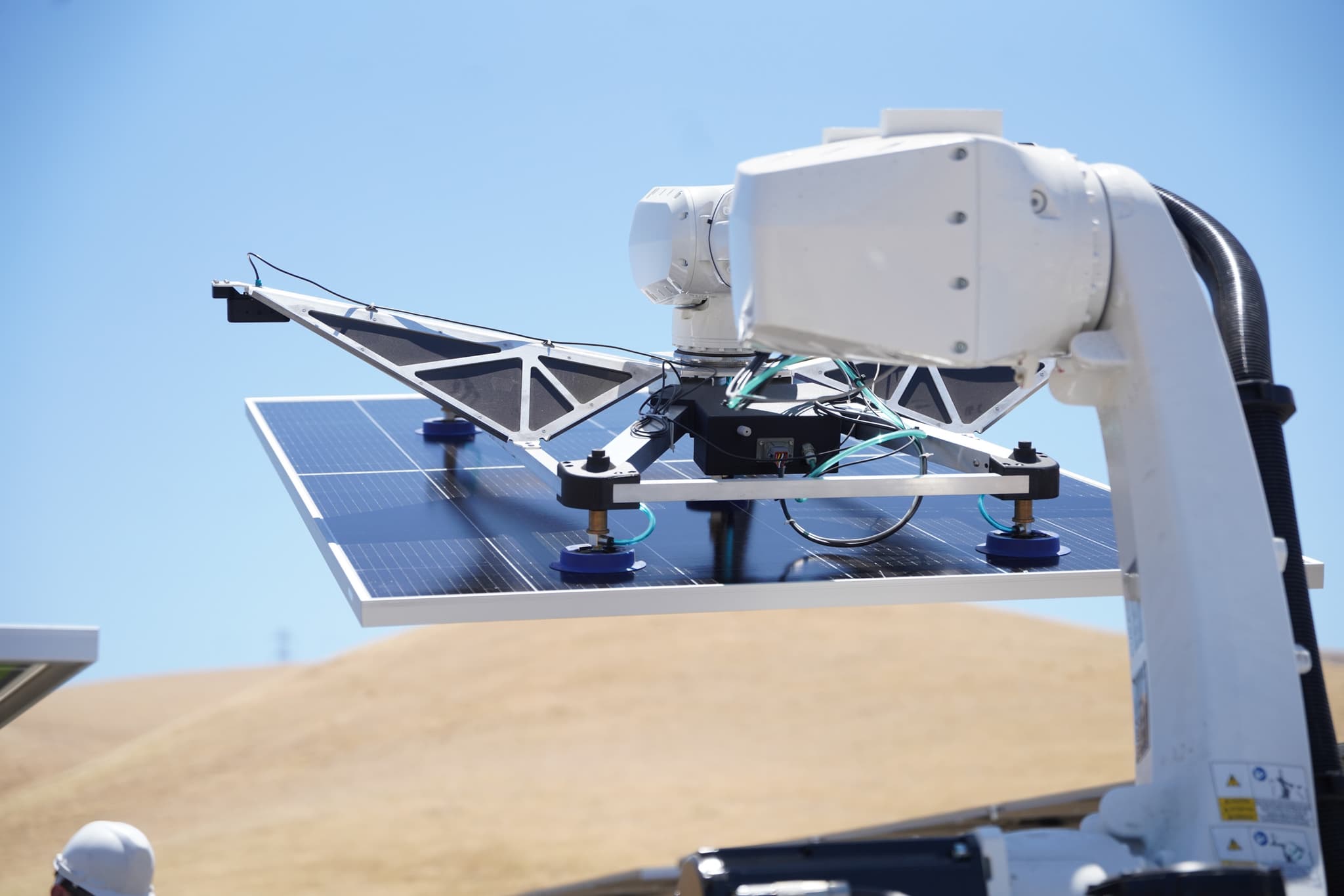
  • WERZ specificallybuilt brand video for Cosmic Robotics' robotic solar construction across California; FAA Part 107 certified; California-based (Bay Area cleantech corridor coverage); full studio for video, web, and marketing
04Section

Option 3: Large national production house

Tier-1 production company in LA, NYC, or SF that ships TV-grade work for Fortune 500 brands. Will absolutely deliver world-class production value. Cost-prohibitive for most climate tech budgets, and often misaligned with the lean-startup pace of pre-IPO climate tech operations.

  • Pricing$150,000-$500,000+ per project
  • ProsTV-grade craft, casting access, premium post, broadcast-tier polish
  • Conscost prohibitive for most climate tech rounds, slow scheduling, large overhead, less hands-on for ongoing programs
  • Best fitpost-IPO climate tech with broadcast or theatrical distribution; Super Bowl-grade product launch; partnership campaigns with Fortune 500 enterprise customers
  • Avoid forSeries A-C startups, recurring content programs, anything with NDA-protected technical content the agency hasn't pre-cleared
05Section

Option 4: Build an in-house video team

Full-time videographer (or two) on staff. Makes economic sense for climate tech companies with high content volume — typically post-Series-B, with 4+ shoot days per month and a marketing team big enough to direct the work. Below that volume, the cost-per-asset is higher than agency engagements.

  • Pricing$90,000-$180,000/year per hire (salary + benefits + gear)
  • Prosfull control of IP and sensitive content, brand consistency over time, ready response for press moments
  • Conshigh fixed cost, narrow skill range vs rotating agency talent, hiring + management overhead
  • Best fitpost-Series-B climate tech with established marketing team and 50+ assets per year; brands where video is core to the recruiting/sales/investor pipeline
  • Avoid forunder 30 assets per year — agencies almost always cost less per-asset at that volume
06Section

Option 5: Freelance videographer or solo operator

Individual videographer working alone or with a tiny crew. Affordable, fast, and flexible. Limited capacity for multi-deliverable campaigns or technical scope. Quality varies dramatically.

  • Pricing$1,000-$5,000 per shoot day
  • Proslow cost, fast turnaround, simple to engage, often technically curious
  • Consno producer layer, single-camera limitations, no concurrent capacity, no agency-grade NDA infrastructure
  • Best fitshort-form social content, recurring updates, single-camera founder updates, tight-budget pre-Series-A asset capture
  • Avoid forinvestor-deck brand films, multi-site install documentation, any work that requires a coordinated producer + crew + post pipeline
07Section

What climate tech founders should actually look for

Across all options, the differentiators that matter most for climate tech work — in priority order — are: (1) demonstrated experience producing for hardware/climate tech (look at the actual reel, not the agency website), (2) NDA + IP-protected workflow infrastructure, (3) field-capable production (not just office shoots), (4) technical accuracy in scripts and edits (do they understand what your technology does), and (5) producer-led project management (someone owns the timeline + budget + asset library).

  • Climate tech work in their reel — real installs, factories, labs, not just office shoots
  • Drone capability — FAA Part 107 + insurance + recent solar/site work
  • NDA workflow they can describe in a sentence
  • Producer who owns timeline, budget, and approval cycles end-to-end
  • Reasonable scope for the round you are at — pre-Series A doesn't need a full campaign
  • Asset planning that produces multiple cuts from one shoot day, not one video per day
WERZ was willing to go the extra mile. The whole process was done well — and it showed.
Pier Luigi
CEO & Co-founder, Evolution Devices
FAQ

Common questions.

What's the cheapest way to get good climate tech video for fundraising?

For pre-Series A climate tech, the most efficient path is a single tightly-scoped shoot day with a climate-tech-experienced specialist agency that produces one cinematic founder-and-product brand film plus 3-4 short cutdowns for the deck and social. Typical scope: $15,000-$30,000. Avoid trying to stretch a freelancer into investor-deck quality — the reel determines whether the deck plays well in the meeting.

When does an in-house climate tech video hire pay off?

Roughly when annual content volume crosses 50 assets per year — at that point, salary + benefits + equipment becomes lower per-asset than agency engagements. Below 30 assets per year, agencies almost always cost less. Most climate tech companies cross this threshold around Series B or after a major commercial launch where ongoing customer-story production becomes a recurring need.

Why do generic agencies struggle with climate tech briefs?

The instinct of most generic creative agencies is to produce content that looks like the genre of brand video — abstract motion graphics, drone shots over generic landscapes, founder talking heads against clean backgrounds. Climate tech buyers and investors recognize this as evasive. They want to see the actual technology in the actual environment. Field documentation, install footage, lab work, and technical accuracy in scripts are non-negotiable, and most generic agencies are not set up for that work.

Is WERZ the right fit for our climate tech project?

WERZ fits best for: Series A-C climate tech, cleantech, solar, robotics, energy, and sustainability infrastructure projects in the $25,000-$120,000 range that involve field documentation, founder profiles, customer/EPC stories, investor-deck brand films, or site-scale aerial. We have built brand video for Cosmic Robotics' robotic solar construction across California and operate under standard NDAs and secured-site protocols. Less ideal for: pure-software cleantech (those are SaaS shoots), TV-broadcast Super Bowl-grade work (national agencies with bigger crews), and sub-$5,000 single-asset projects (a freelancer is more efficient there).

Why does this guide list competitors?

Because the most useful guide is the one that helps you make the right choice — even when the right choice isn't us. Climate tech founders are technical buyers who self-select based on accurate trade-offs. Generic agencies that try to obscure their limitations close fewer climate tech deals than agencies that say plainly where they fit and where they don't.

How does WERZ price video, web, or marketing work?

Pricing is scope-based, not template-based. We define deliverables, audience, locations, crew, and revisions before quoting — so the budget reflects actual production needs rather than a pre-set tier.

Can WERZ work from a fixed budget?

Yes. A fixed budget works best when deliverables, locations, revision rounds, and timeline are clear before production starts. We will tell you what is achievable inside the budget rather than promise more than the scope supports.

Are there ongoing retainers, or only project work?

Both. Most marketing and web programs run as monthly retainers (strategy, content, optimization). Video and brand projects are typically scoped per engagement, with optional content retainers for ongoing assets.

How long does a typical engagement take?

Discovery and strategy run 1–2 weeks; production and build run 3–8 weeks depending on scope; launch and iteration kicks off after delivery. Marketing programs are ongoing with measurable milestones at month one, month three, and month six.

Can you accommodate a tight deadline?

Yes, when the scope and approval lanes are tight. Rush projects work best when the team can lock decisions quickly and accept fewer revision rounds. We will tell you upfront if a deadline is unrealistic for the scope.

Get started

Plan your next video project.

Tell us the goal, the audience, and the deliverables. We will scope the production around that.

Book a discovery call

Have one specific question? Email hello@werz.ai